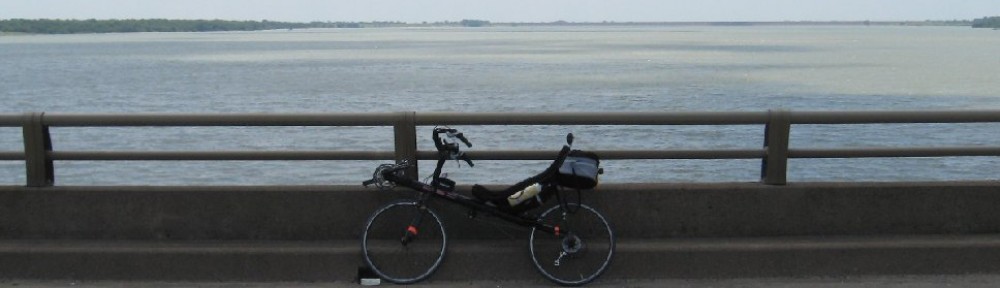
I took off this morning on the F-5 and did my usual ride route through Mabank with a loop on US Hwy 175. I ended up with 34 miles. After I got home, I realized that it was my first July ride this year. That means half the year is gone. So I sat down this afternoon and logged in my June mileage, and calculated my total mileage for the first half of the year. As of the end of June, I’d done 74 rides for 2,333 miles. That’s a bit ahead of last year’s mileage at this point, and about what I would expect for half the year. I haven’t had health issues that kept me off the bike much, always appreciated these days in my old age. All that mileage is solo rides from home. I haven’t done any organized rides this year.
Author Archives: Bud Baker
Lake Athens, week of June 28th.
I noticed last Sunday that they’ve finally stopped releasing water from Cedar Creek, and it’s finally gotten down close to normal level, so it should start slowly clearing up now. But I’ve been having so much fun at Lake Athens that I just fished it again this week. I went Monday and Wednesday. The crowds have fallen off quite a bit since the last couple of weeks. It’s enjoyable to be on the lake right now. And it’s almost down to normal level too.
I caught 10 bass Monday. The best fish of the day weighed 3.60. And on Wednesday, I caught 13 bass, the biggest weighing 4.78 pounds. I caught several other nice bass both days. All the grass beds on this lake have kept a lot of the fish shallow so far this summer, and I’m enjoying the shallow bite. There’s some schooling bass chasing shad too, so I stay ready to make a long cast, and make a jig and minnow dance near the surface when I reach near any of the schooling bass. I’m still doing a lot of experimenting with these finesse baits, and this nice bite at Lake Athens is a good place to do it.
Lake Athens, June 19th.
I haven’t posted about my fishing trips lately. With all the flooding, Cedar Creek has become a muddy mess, and even Lake Athens has gotten tough. I hadn’t even fished Cedar Creek since the start of all this high water until Wednesday last week, when I launched at mid lake and fished for about three hours. And just like the day before at Lake Athens, thunderstorms quickly built up and ran me off the lake before I’d caught much. I fished at Cedar Creek again this Tuesday, this time on the lower lake, and even there, the water looked terrible. The clearest water I found was at the dam, and even there, water visibility was only about two feet. Bobbi had told me that morning that she’d like to cook fresh crappie for dinner, so I spent more time than I usually would on such a tough bite, trying to get a few for dinner. I ended up catching 4 bass, 4 crappie, and one channel cat. The crappie weren’t all that big, but 4 of them were enough for dinner, so Bobbi cooked fresh crappie.
I went back to Lake Athens yesterday, even though it’s gotten very crowded since June arrived, and has been tough for me. Once again, the parking lot was overflowing, and 10 or so vehicles and boat trailers were parked on the grass. On a Thursday! That’s busier than many lakes are on a summer weekend. There were pontoon boats and big play boats pulling inner tubes everywhere, more of that traffic than even fishing boats, and there were quite a few fishing boats. But I managed to catch a few fish anyway, 8 bass and 1 crappie. And just before 3:00 in the afternoon, right before I was going to leave and head home, with boats and tubers flying by everywhere, I caught a five pounder. Those tend to be a lot more scarce this time of year than they are in the spring and fall, and here I was catching one with all the craziness going on around me. It’s a reminder that sometimes all that bothers we fishermen more than it does the fish. I don’t like being in the middle of all that very much when I fish, but as long as Cedar Creek remains such a muddy mess, I’m thinking I’ll just keep going to Lake Athens. It’s above normal lake level too, and not as clear as it usually is, but better suits the finesse fishing I like to do than Cedar Creek does right now.
One of the most interesting parts of my changing to newer finesse bass fishing techniques, Ned rigs and jig-and-minnow rigs, has been the bait and jig experimentation I’ve done. In the late fall at Cedar Creek, the crawfish-looking finesse TRD’s were the best baits, but since then, and especially at Lake Athens, with all its grass beds, the jig-and-minnow baits have been the best. At one point, I posted thoughts that I needed bigger jig-and-minnow baits at Lake Athens, but since then, the opposite has been true. My best bait has been the 4″ Finesse ShadZ, on a 1/16 oz worm nose jig. This bait is a 4″ shad or minnow looking bait, but 2″ of the 4″ is a long tiny round pin tail. The bait’s profile looks much smaller than most 4″ baits. I’ve been surprised at how many crappie I’ve caught on it. But it catches big bass too. I’ve caught two 5 pounders at Lake Athens since I started fishing it last month, and one of them has been on this little Finesse ShadZ. I’m finding myself fishing this bait more and more, and finding new things to try with it. More on that later.
Week of May 24th, Lake Athens
After I moved to Gun Barrel City in 2013, Cedar Creek became my home lake, and I pretty much just fish it all the time. The past three years, I’ve been making bass bed sight fishing trips to Lake Fork in March and April, but the rest of the year, it’s been back to Cedar Creek. But with all the flooding, Cedar Creek is staying murkier than I’ve ever seen it, and the fishing has been tough for me, so I’ve skipped posting anything the last couple of weeks. I’ve caught a few fish every trip, but not what I would expect to be catching in May. Last week, I finally decided it was time for something different, and made two trips to Lake Athens. Lake Athens is a clear lake, full of aquatic vegetation, with a good population of nice size bass. It has a restrictive limit for black bass, plus is located right next door to the biggest TP&W hatchery in the state, so gets well stocked with fingerlings, plus some brood fish that get released. Bottom line, it’s a good bass lake, with nice clear water, and only 30 minutes from home. I decided it’s time I started fishing it some.
I went fishing at Lake Athens both Tuesday and Thursday last week. I’d only made two previous trips to Lake Athens, one was crappie fishing, and the other was bed fishing in March, two years ago. Like most lakes with big grass beds, that is the predominant cover for bass fishing. I’m having to learn those grass beds, and with the lake a few inches above normal level, the edges of those grass beds are tougher to see, making learning them tougher as well, but I’m having fun learning the lake, and catching some fish along the way. I caught 7 bass Tuesday, including 5.38 and 4.10 pounders. On Thursday, I caught 9 bass, and the best two weighed 4.08 and 4.80 pounds.
I’d forgotten how much fun it is to fish grass beds. But my usual Ned rig baits seem a bit small for this lake. With finesse TRD’s, all the bites I got were from either crappie or perch. And even with the four inch Scented Jerk Shadz, I got lots of crappie and perch bites. I actually caught 4 crappie and a perch. I ended up thinking I need to add a bigger bait for this lake. So I bought some five inch Scented Jerk Shadz’s, and made heavier jigs with bigger hooks to rig them with. I’m going to try them out this week. Up to this point, every finesse plastic bait I had fished had been on the 1/16 oz Ned rig jigs, but the five inch Shadz’s will be on a 1/8 oz jig with a bigger 2/0 hook, so should probably be called “jig and minnow” rather than Ned rig. We’ll see how that rig works.
My tail weight and finesse jig making
Most of my bass fishing these days is finesse fishing with small lures and spinning rods and reels. It suits my old man body better than what I used in my tournament days. I first tried tiny child rigs three springs ago for my Lake Fork bass bed sight fishing, and was amazed at the results. I then tried them for my dock fishing here at Cedar Creek, and they were so much better than the shaky head jigs I’d been using that I quit fishing the shaky heads altogether. The other finesse bait I’m using a lot now is the Ned rig. I just started using them this last December. I’m still learning all the ins and outs of them, but they have also been an amazing bait.
For close to 50 years now, I’ve been making a lot of the lures I fish with, from jigs, spinnerbaits, and chatterbaits, to injecting the plastics I used for crappie and bass fishing. So it was a natural for me to start making the tail weights for the tiny child rigs and the jig heads for the Ned rigs. I was also making some of the plastic baits for the tiny child rigs at first, but found the Zman Elaztech baits to be so much better that I’m no longer making my own bass plastics. Besides being so soft and buoyant that they get great action, the Elaztech collapses so completely so easily that it interferes with a hookset so much less than any plastic that you just don’t lose many fish, even using smaller hooks. When I was making some of my own plastic baits for the tiny child rigs, I ended up using EWG hooks with them, to get a better hookup rate, but they still didn’t hold fish as well as smaller hooks on the Elaztech baits, plus got torn up so much faster. Bed fishing at Lake Fork is a great way to test baits, and clearly showed the Elaztech to be better. I’m still injecting crappie plastic, but all of my tiny child rig plastics are now Elaztech. So when I started fishing Ned rigs, it was a natural to just use Elaztech baits on them too. I’m mostly using the smaller Finesse TRD’s on the Ned rigs, and the bigger Big TRD’s on the tiny child rigs.
Making tail weights for the tiny child rigs and jig heads for the Ned rigs both ended up being much more challenging than I would have thought. I visited the Texas Fishing Forum lure making sub forum under the bass section, to see what others might be doing, but was surprised to find nothing on either the jigs or tail weights there. I already knew that pretty much no one at Lake Fork was using these baits for sight fishing beds, and have enjoyed going right behind other boats and catching so many bedding bass that wouldn’t bite their bigger ugly baits, but I was certain that with all the good bass anglers on TFF, there would be some discussing these finesse baits. I was wrong. Either no one else around here is using them, or they just aren’t talking about them. I finally seem to be past the major challenges and settled in on both the tail weights and jig heads I’m making now, so thought I would post about them here.
With the tiny child rigs, I quickly found that I liked the VMC half moon weights best, and bought the Do-It mold to make them. Do-It calls that mold Worm Nose sinkers. With mushroom head weights that only had a thin wire keeper, they wanted to fall out of the baits, and tail weights that insert completely into the bait just don’t give you as much weight right on the end of the bait, so didn’t seem as good as the half moon weights, when it comes to making the bait stand up. The biggest challenge with the half moon tail weights is inserting them into the TRD. If you just try pushing them in up to the mushroom head, they simply spring back out, having not even penetrated the bait. I ended up sharpening two different size small Phillips screwdrivers to use. I wet the smaller one and push it into the end of the TRD, further than I will insert the tail weight, then do the same thing with the larger screwdriver. I leave that bigger screwdriver in the bait while I’m putting super glue on the weight and getting it ready. As soon as I remove the screwdriver, I immediately insert the tail weight. This method works very well. But it’s enough trouble that I usually glue a few into TRD’s at home, ahead of my fishing trips. But that caused its own problems. More on that below.
While I really liked these half moon tail weights, getting a homemade version of them proved tougher than I thought. For years, I’d been using a bismuth-tin alloy for all my crappie jigs, and that worked well until I changed from regular jig heads to heads with a collar. Collar jigs would break at the collar. So did the tail weights, but they also had another problem. While lead shrinks as it cools, bismuth does the opposite, it expands. So with molds than have flat edges, such as the back face of a mushroom head or some barbs on a collar, bismuth can expand enough to wedge the lure into the mold, and you can’t get it out. This was a major problem with the tail weights. I could only get about one of every five out of the mold without breaking it, and then when I fished with them, just a bass shaking its head could break them.
I hadn’t poured lead in many years, but I had an second unused Lee melting pot, so I bought lead and tried using it. Lead ended up having its own set of problems for my needs. It appeared to make great tail weights. But it turns out that salt filled baits, like the TRD’s I was using, eat lead. It’s such a chore to get a half moon weight inserted into a TRD that I always inserted some ahead of time at home. But within a few weeks, the salt in the TRD’s would have eaten the barbs right off the weight. And even before that happened, there would be so much corrosion between the weight and the TRD that the weight would just fall out. By the time I discovered that, I had already started using an alloy, 50 percent lead, 40 percent bismuth, and 10 percent tin for my crappie jigs. That worked very well for them. It’s a lot tougher than the bismuth/tin alloy, and the collars on the crappie jigs didn’t break any more. But it still didn’t work well for the tail weights. Like the bismuth, it was still really tough to remove from the mold, and still corroded, but quite a bit slower, when left in the TRD’s. It occurred to me that I had another metal I could try for the tail weights: tin.
If you price tin, you’ll find it to be outrageously expensive, at over $30 a pound. But I already had plenty. Besides using it to alloy with bismuth, I’d made reusable spit shots with it years ago. The tin worked great in the tail weight mold. It removed easily and after several weeks in the TRD’s, shows no signs of corrosion. Tin isn’t completely impervious to corrosion from salt, but it obviously happens at a much slower rate than lead. But tin is only around 60% as heavy as lead. So I weighed the lead alloy tail weights before I tried tin. The weights from the 1/16th oz cavity in the mold weighed .080 oz. I was surprised at that. 1/16th of an oz is .0625 oz, and this was lead alloy, which should have been somewhat lighter than lead. Obviously, the mold makes heavier weights than advertised. I poured 1/16 oz and 1/8 oz weights with the tin. The 1/8 oz cavity made weights which weighed .083 oz. That’s just .003 oz more than what I had been using, so I’m now using those for the Big TRD’s. The 1/16 oz cavity made weights which weighed .054 oz. I’m going to keep a few of those around too, and use them when I occasionally fish with a Finesse TRD rigged as a tiny child rig.
A Big TRD with tail weight, the tail weight I’m making for it, and the screwdrivers I use to insert it.

When I started making jigs for the Ned rigs, I tried several different ones, including the Do-It Finesse Jigs. I ended up liking the ones from the Do-It Worm Nose mold the best. These are just like the old Gopher Mushroom Head jigs preferred by many midwest finesse anglers. The only problem with this mold is that the smallest cavity makes a 3/32 oz jig, and I want a 1/16 oz jig. I decided I could solve that by just grinding enough off the nose to take it down to 1/16 oz. I started out using pure lead for these, but ran into the same problem I had with tiny jigs on bass size hooks in my shaky head jig making: a tiny lead head on a bass size hook ends up with a loose hook/keeper/spring or whatever. I next tried the lead/bismuth/tin alloy, but once again, had trouble getting the jig out of the mold. I ended up with the same solution as I did with the tail weights, namely tin.
When I tried pouring the worm nose jigs with tin, it poured perfectly, and I got a jig from the 3/32 oz cavity that weighed from .057 oz to .059 oz. That’s barely under the 1/16 oz I wanted, so these jigs are perfect. An added benefit is that I can now use powder paint to paint the jig heads. When I had tried that with the lead alloy version of these jigs, I found that the alloy melted off the hook at a lower temp than the powder paint needed. But tin melts at 449 degrees, quite a bit higher than the powder paint, so I’ve started painting these jigs now, as well as the mushroom head on the tail weights. I ended up liking the size 1 Owner 5313 hooks best. These hooks are made of a bit heavier wire than thin wire hooks, but still fit the Worm Nose mold. And they are shorter than most size 1 hooks, even shorter than the size 2 Mustad hooks I had tried. I think that helps a lot in a small bait like a Finesse TRD. Too many anglers use jigs with hooks so big that they diminish the action of the TRD’s. The size 1 Owners are strong enough to not bend easily at all, hold even bigger bass very well, but are small enough to work perfectly with these tiny finesse jigs. I’ll continue to use the lead alloy for my crappie jigs, but it’s really nice to be using something as non-toxic as tin for all my bass fishing jigs and weights. Here are some pics of what I’m making now.
A Finesse TRD with my new jig.

The finesse jigs and tail weights I’m making now.

That last jig is a hover jig, made from a Do-It Hover Jig mold. I really haven’t tested it much yet; I didn’t get the mold until the dead of winter. It inserts completely into a minnow type bait. You insert it 1/4″ to 3/8″ from the front of the bait, then coax the nose of the jig into the bait too, and add a drop of super glue to hold it. These style jigs are becoming very popular with tournament anglers to fish for suspended bass they’ve found using forward facing sonar. I don’t have FFS, but think there will be situations where these jigs suit me well. They put the weight further back in the bait, and so help keep the bait always horizontal, rather than moving nose down like most jigs do. That’s a more natural presentation for a really slow moving bait. Abd the weight being further back also causes a more erratic and more sideways movement when you twitch the bait.
The pic below shows a bait with the hover jig right below the same bait with a mushroom head jig.

I don’t know if anyone at TFF will have any interest in making these for themselves, but I’m going to put a link to this blog entry for anyone who might.
Lake Fork and Cedar Creek, week of April 26th
I headed back to Lake Fork Tuesday morning. The forecast was for clear early, then turning cloudy as the day went, but it ended up being mostly sunny all day, and with light winds, a truly beautiful day to be sight fishing on Lake Fork. But the fishing was tough. There were still some bass on beds, but many were just swimming around and uncatchable now, especially the bigger ones. I ended up with 12 bass. Two were just under 4 pounds, with nothing bigger than that.
This pretty Lake Fork bass from Tuesday weighed just under 4 pounds.

Storms were predicted for the rest of the week, so I gave up on any more Lake Fork trips, but when I got up yesterday (Thursday) morning, it was very dark, but the storms were all west of DFW, so I decided to just stay close to home and fish a few hours at Cedar Creek, and get off the lake quickly when the storms got near. I launched at mid lake, and started out fishing a Ned rig. I’d made two new rods specifically for Ned rig fishing, and wanted to try one out. I didn’t have any luck finding bass, but in a reminder that Ned rigs will catch all kinds of fish, it seems only fitting that the first fish I caught on it was a nice large crappie. I decided to concentrate on crappie instead, and caught 7 more in the next couple of hours. One was a beautiful 2 pounder. But the storms built up and headed this was much quicker than I expected, and at shortly after 11:00 that morning, I loaded up and headed home.
My nice 2 pound crappie from yesterday morning.

Considering how warm it has stayed, and how late the bass spawn has progressed because of that, I’m thinking of giving up my Fork trips for the year, and just fishing close to home at Cedar Creek. Or I could explore something new on the lower part of Fork and see if I can find more decent numbers of still bedding bass. We’ll see.
Lake Fork, week of April 19th
I made two trips to Lake Fork this week, Monday and yesterday (Wednesday). As windy as Texas tends to be this time of year, I try to pick the least windy days to go. This week was no exception. It was windy all week, but Monday and yesterday were less so than the rest of the week, so I fished both of those days. Monday morning was very windy, but the wind slowly decreased all day, and by late afternoon, there was very little wind. Yesterday was just the opposite, with light winds in the morning, but fierce winds by afternoon. I caught 13 bass Monday, The largest weighed 4.51 pounds.
This 4.51 pound bass was Monday’s biggest.

By late yesterday afternoon, I’d caught a couple of bass that were just under 4 pounds, and a bunch of 2 and 3 pounders, and nothing bigger. I’ve mentioned before that by these later stages of the spawn, I tend to catch smaller fish. Most of the truly giant late spawners tend to use beds too deep to see or sight fish for, and the few who do spawn shallower are very wary, and will typically leave their bed when a bait is cast to it, and not return until there is no longer a boat nearby. But with all its big fish, magic can happen on any day at Lake Fork, and it did at just after 4:00 yesterday afternoon.
I was fishing in one of my favorite coves on the lake, one that can be especially good in the late afternoon. I’d just fished the best bank in this cove, and saw 4 large bass as I worked down it. Two were just swimming around shallow and the other two would leave the bed and not come back as soon as I put a bait on it. Nothing new there. But after fishing the rest of the cove, I decided to look at this bank again. It’s protected from most wind, and usually dead calm, but yesterday’s wind was so fierce when I first fished it that there were ripples on the water there, and I thought I might have missed seeing some smaller fish on it. And the wind had eased just a bit, so I tried the bank again. Sure enough, I spotted and caught a couple of smaller bedding bass. Three of the four larger bass were still exhibiting the same uncatchable behavior they’d shown earlier.
But the largest of them acted differently this time. When I cast my bait onto her bed, she immediately left it, but rather than staying out in the deeper water, she turned around after just a few seconds and swam back to the bed. The next time I cast, she did the same thing. After the third time of this, I had my bait already on the bed before she returned, and just as she swam back onto the bed, I twitched the bait. She immediately engulfed it, and the fight was on. There were a few tense seconds as she took off and pulled out a lot of line against my reel’s drag, while my line was still around a clump of grass near the bed. But I managed to free the line from the grass without losing her, and shortly afterward, was weighing the largest bass I’ve caught in very many years, a 9.65 pound beauty.
At 4:12 yesterday afternoon, I caught this 9.65 pound Lake Fork beauty.

I ended up with 17 bass for the day. As I mentioned earlier, most were 2 or 3 pounders. But an almost 10 pound bass will give me a special memory to keep for as long as my memory continues to work. Not surprisingly, I’m excited about my next Lake Fork trip. We’ll see what next week brings.
Lake Fork, week of April 12th
I made trips to Lake Fork on Tuesday and Thursday this week. Both days were beautiful, mild and sunny with light winds. I saw water temps as warm as 72 degrees. That, as well as the changes in the fishing, is telling me we’re moving toward the end of this year’s spawn at Lake Fork. As late as things got started this year, I really thought the spawn would run longer this year. But that’s obvious that’s not the case. When things finally warmed up, they warmed up so much that the water will soon be too warm for most bass to want to spawn in. If they don’t get it done soon, they likely won’t get it done this year. The spawn is still in full on mode right now, but the decreasing size of the fish doesn’t lie. It will soon be over, except for a few stragglers.
And like always in this part of April, the number of fishermen on Fork is incredible. So the fishing pressure is intense. In spite of constantly being near other boats this week, I still had a blast and caught a lot of fish. I caught 12 bass Tuesday and 11 bass Thursday. But they definitely averaged smaller than I’ve been catching. On Tuesday, I managed two 5 pounders, and three others that went over 4 pounds, but on Thursday, none of the fish I caught were quite 4 pounds. Now don’t get me wrong, sight fishing for and catching a 3 1/2 pound bass on finesse tackle is still a blast, and I’ll keep making my Fork trips as long as I can catch these, but when the truly large bass start getting too wary to stay on a bed and take a bait, it’s a sure sign that the end of the spawn is coming. I’m probably going to make another trip or two to Fork next week, but after that, we’ll see. By then, it might be time to move my fishing back to Cedar Creek, and go after crappie and post spawn bass.
This was one of two 5 pounders I caught Tuesday.
Lake Fork, March 31st, 2025
I had another incredible day of fishing at Lake Fork yesterday. The bass spawn is really going right now, with bass on beds everywhere. I ended up catching 17 bass, with all but two being 3 pounds or bigger. There was one 7 pounder and five 4 pounders, with one of those amost a 5 pounder, at 4.85.
The main lake is 58 degrees now. There was a pretty stiff north wind early yesterday, but it eased up as the day went. And like so often seems to happen at Fork in the spring, it was pretty tough fishing in the morning, but then a spectacular bite in the afternoon. It seemed to be a smaller crowd on the lake than usual yesterday, and most of the ones who were fishing either weren’t targeting bedding bass, or weren’t finding them. The water has cleared slightly, but it still takes a pretty keen eye to spot most of them.
Stormy days are predicted for the rest of the week, so I’m not sure if I’ll make it there again this week or not.
Lake Fork, March 25th, 2025
Sight fishing for spawning bass is very different from most fishing an angler would undertake. You are casting a bait to a bass you can see, sitting on its bed, watching the bass’ reaction to your bait, and in the best of circumstances, seeing the bass inhale the bait. I end up covering a lot of water when I bed fish at Lake Fork, much of it either navigating the stumps with the trolling motor on high, or idling with the big motor, as I move from one spawning cove to the next, then watching without even having a rod in my hand as I troll along once I’ve reached a likely area.
When I see a bass, or something I’m convinced is a bed, I’ll stop and survey the area carefully, waiting to see if a bass comes back to the bed, or if I can see another bass in the area. Bass do tend to pick the same areas as other bass to spawn in. And so there is often more than one bedding bass visible at a time. Many of these bass are so spooky with a moving boat around that you will only see them returning to their beds if you stop and remain fairly still for a few moments. These aren’t days when I catch a large number of fish. I really don’t try for bedding bass that are under three pounds, but then can spend a half hour trying to catch a bass on a bed. Many bedding bass prove to be uncatchable, most probably because they have already been recently caught and released. Those fish will usually not return to their bed when a boat is anywhere nearby, or else leave the bed at full speed any time a lure is cast to it.
So the bottom line is I spend a lot of time doing other things besides seriously trying to entice a catchable fish, so usually only hook somewhere between 3 and 12 fish on one of these Fork bed fishing days. I use good seven foot medium power fast action fishing rods, and have recently upgraded to some size 30 spinning reels to pair with them (most of my reels are smaller size 10 reels) for the Z-Man TRD plastics I use on a tiny child rig. These are finesse baits, finesse fishing being pretty much the only bass fishing I do in my arthritic old age. I keep three of these rods rigged, and no other rods on the deck of my boat, for these trips. One of the most amazing things about these finesse rigs is how few nice fish you lose. Out of the 15 bass I’ve hooked on my last two fishing trips on this timber and clumpy weeds filled lake, I’ve lost zero. I’ve never seen another finesse rig that lands such a high percentage of nicer bass.
Yesterday was the perfect weather day for sight fishing, sunny with light winds all day. There are too few days like that in the spring in Texas. Lake Fork draws huge crowds of anglers this time of year, and yesterday was no exception. I’m always surprised at how few of these fishermen are actually sight fishing for bass, and out of the ones who are, just how few are very good at it. I routinely fish right behind other boats, some of them with step ladders or other raised platforms on the deck (a practice that seems far too dangerous on a stumpy lake like Fork, to me), and catch so many fish they have missed. How does an almost 74 year old man wearing prescription sunglasses accomplish this? I don’t know, but I won’t argue with it. I take photos of all the fish I catch on these trips. It helps me keep a count of what I catch, plus I enjoy sharing pics with Bobbi while I’m out.
And so that is the backdrop for my trip to Lake Fork yesterday, that turned into the bass fishing day of a lifetime for an amateur like myself. I ended up catching 10 fish, two of them 4 pounders, three of them 6 pounders, and one 7 pounder. My best five fish would have weighed over 30 pounds. I never managed to accomplish that feat in all my tournament fishing years, or even before or since, for that matter. I didn’t even catch my first fish until 11:21, so most of the excitement was in the afternoon hours. Some highlights of the day:
11:59: I was trolling out of the cove where I’d caught my first fish, near the main point. Most days, this stretch of bank would have had too much wind on it for me to even check it, but on this almost completely calm day, I was looking. This fish was like the holy grail of bed fishing. I spotted her from quite a ways away. She never saw me at all, even while I was making my long casts towards her. She took the bait on my second cast. I got a very solid hookset, and she ran right out of the weeds that surrounded her, into the open water. This scenario is what every bedding bass angler is looking for, but doesn’t often happen. My second bass of the day, she weighed 6.30 pounds.

1:40: I had made it into my favorite spawning cove on Fork. I’d caught a couple of fish in it already. One of them weighed 4.24. This fish was far back in a tiny opening in the weeds. I only threw my bigger TRD at this fish. That rig has 20 pound test braided line on it (as opposed to the 15 pound test on my other two rods), and I knew I needed all the help I could get to get her out of all these weeds, if I hooked her. There were other bedding fish nearby, and with my pole anchor down, I was going back and forth fishing for her and the other fish. It took me about 15 minutes to catch her. My fifth bass of the day, this beauty weighed 7.04, my best bass of the year so far.

2:24: This fish was one of the other fish I was fishing for when I caught my last fish. She was on a deeper bed with a male mate. Neither of these fish stayed on the bed well or showed much interest in my bait when I first fished for them, so I had moved to the back of the cove and fished for several likely looking bed fish there, but failed to catch any of them. On my way back out of the cove, I stopped to try these two fish again, and she immediately acted much more aggressive this time, and took the bait on my fourth cast. My sixth bass of the day, this one weighed 6.42.

4:31: After catching another 4 pounder, I’d left my favorite cove and moved to another smaller cove I really like. There were a number of fish to be seen, but most were either just cruising the shallows, or sitting suspended, with no visible bed nearby. This beautiful fish appeared to be on a bed, but when I cast a bait to her, she just moved to another spot that looked like a bed. When I cast there, she took off to another spot. This is a common occurrence, musical beds, I call it. When fish do this, they usually aren’t catchable, so I moved on fairly quickly. I managed to find a nice chunky 3 1/2 pounder a little further into the cove. That fish stayed on the bed, acted aggressive toward my bait, and was soon getting it’s photo taken and being released. I didn’t find anything else that seemed catchable in the back of the cove, and as I moved back out of the cove, this fish was again on the bed where I’d first seen her. As soon as I cast to her, she again moved to what looked like another bed. When I cast there, she immediately inhaled my bait and took off with it. As I set the hook, I don’t know who was more shocked, me or the fish. She ran behind clump after clump of weeds, and I was pretty sure I wasn’t going to be able to land her. But I followed with the boat, then managed to coax her around the worst clump of weeks, and netted her. My ninth bass of the day, this one weighed 6.55.

One 3 3/4 pounder in the next cove, and my day was done. An unforgettable day it was for me.