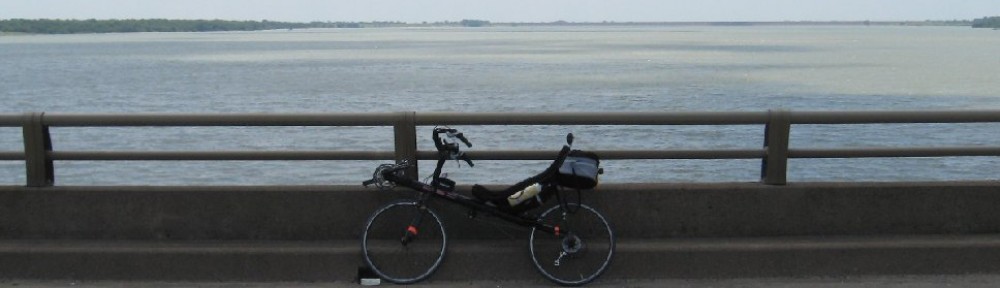
First ride with my pacemaker

Today was my first ride on the bike since getting my pacemaker, 11 days ago. I just did an easy pace ride on my indoor bike. I’m supposed to be careful about lifting and other very strenuous activities for a while yet, so a ride on the indoor bike seemed like a good place to start with some easy activity again.

A lot of thoughts about my exercising, and cycling in particular, have been running through my head since my electrical heart problems and subsequent pacemaker implant lately, not the least of which has been wondering how much of these heart problems were caused by my cycling. It’s no secret that older serious endurance cyclists who keep it up after many years of it end up suffering more than their fair share of irregular heartbeat problems, especially men. If you compare what I’ve been doing to what many of the ones who’ve developed these problems have been doing, there isn’t much doubt that I’ve been doing considerably less. But then, my heart was never as strong as most of theirs to begin with, so has what I’ve been doing been enough to cause the kind of heart muscle scarring that they can end up with, and the same electrical heart problems? There’s really no way of knowing that for sure, but I’m leaning toward thinking yes, this is likely related to and as least somewhat causative of what has happened to me.

As I mentioned in my last blog post, I had already decided to cut down on my number of hours of riding per week. I’m thinking now that it’s time to cut down even more, to try and maximize the health benefits of my riding, without overdoing it. I had been trying to keep my time on the bike to around 400 minutes a week. That is the amount of time of easy pace endurance riding that showed the most help for patients with heart diastolic disfunction, a condition I’ve had for quite some time. But studies have shown that for overall health implications, something on the order of 250 to 325 minutes a week has shown to be the best. As I approach 75 years of age, with these new heart issues, I’m thinking it might be time for me to cut down to something like 300 minutes of riding a week. 60 miles a week on the bike would satisfy that, so I’m thinking that three 20 mile rides a week may be my norm, going forward. I still do core exercises, plus some light dumbbell work, so the riding isn’t the only exercising I do (when I’m not recovering from surgery, like I am right now). 60 miles a week of mostly easy pace riding may be plenty enough for me, these days.

Even when I’m not in recovery mode like I am right now, my indoor riding tends to be more easy paced riding than my outdoor riding. The virtual route I do is very flat, and without starting and stopping, and the other real world factors that my outdoor rides have, so is a natural route for easy pace riding, and that’s what I normally do on it. Thinking about that, I decided to compare today’s ride with a ride from a year ago, on the same route. I’ve had some concerns about my riding going forward, with a pacemaker, and taking the new beta blocker drug (metoprolol) they have perscribed for me. A beta blocker slows your heart rate, and when I took one briefly before, I couldn’t get my heart rate up much at all. In addition to that, a pacemaker can present the same problem. Today’s sophisticated pacemakers attempt to detect when you are more active, and raise your heart rate accordingly, if needed, but most of what I’ve read shows that they have a tougher time correctly detecting exercise activity when it comes to cycling, as opposed to walking or running, where they are better able to sense that, and speed up your heart rate. So I was curious how today’s ride would compare to a ride from a year ago, which was before I was having the acute electrical heart problems of recent days. I figured the pace from a year ago ride on the indoor bike would be similar, so after today’s ride, I looked one up, and compared the stats.

It was pretty interesting. The ride I found was a 20 mile ride on February 23rd, 2025, so almost exactly a year ago. 20 miles is less that I usually rode back then, so was as close to today’s 15 mile ride as I was likely to find. I mostly wanted to compare average heart rate vs average watt output. So I copied and pasted stats from my Garmin Connect website pages into the image below.

As I suspected, I did have trouble getting my heart rate up today. My average heart rate for the ride was just 95 bpm, compared to an average heart rate of 120 bpm a year ago. The difference in my max heart rate on the ride was pretty much the same, 105 bpm vs 129 bpm. But surprisingly, my average watt output was 103 on today’s ride compared to 105 watts a year ago, virtually the same. That kind of leaves no doubt that I have a much more efficient heartbeat with the pacemaker and beta blocker than I did a year ago without them, and that was before my electrical heart problems became noticeable to me at all. My temptation is to rant and rave about not being able to get my heart rate any higher than that. But considering I had no problem matching the pace I used a year ago on the same route, I think I’ll forego that, for now. My outdoor road rides, which I’ll resume as soon as I have recovered enough, will include some short spurts of needed higher intensity riding, and I wonder how that will go, with the beta blocker and pacemaker limitations, but at this point, I’m thinking I will hold off on getting too worked up about it, and wait and see how that goes. If I can achieve similar speed and watt output, with the lower and more efficient heartbeat I now have, I may forget about trying to get my heart rate any higher, and just live with the “old man”-like heart rate I now have, and call it good. We’ll see.

2025 cycling miles, and new heart problems.

I didn’t do my usual end of the year cycling report on this blog this year. I was having health issues that were bothersome enough that I just wasn’t motivated enough to do my usual cycling stats review. My issues started back in the spring, but didn’t seem to amount to much at that point. I was on the bike one morning when a line of storms came moving in much earlier than expected. I was making an all out effort on the bike to get myself home before the worst of the storm hit.

I’ve used a heart rate sensor when I ride for many years. Back in my days of long distance riding, with a considerable amount of high intensity riding mixed in, monitoring my heart rate was a big help in pacing myself, as well as keeping track of how I was doing in a high effort ride. So I still use one when I ride. On that stormy day in the spring, when I got a mile and a half or so from home, my heart rate display on my Garmin showed my heart rate quickly dropping from the 140’s to the 70’s. I knew that wasn’t correct. There was no way I could be putting out that kind of effort, and have my heart rate only in the 70’s. So, when I got home, I replaced the battery in the chest sensor I wear to give me those Garmin numbers.

But a couple of weeks later, the same scenario happened again, with me putting out a lot of effort to get home ahead of a storm, and my heart rate dropping into the 70’s again. This time, I assumed the sensor was bad, and swapped it with the one I use on my indoor bike. But it was only a few weeks before it happened again, and I was pretty much forced to concede that it wasn’t the sensors, it was me. Something about my heart beat was fooling the sensors. I’d had no physical symptoms during these rides, so wasn’t too concerned. But thinking about it, I decided that at 74 years of age, perhaps I had no business making extended maximum efforts on the bike any more. So I did a better job of staying closer to home on stormy days, and refrained from putting out that kind of extended effort again.

That served me well for the rest of the year, until Christmas week. That Monday, I was climbing the biggest hill on my outdoor route. Now mind you, even that hill doesn’t amount to very much. It’s a fairly flat outdoor route I ride. That hill isn’t steep at all, but it’s kind of long. It’s always the part of the ride that gets my heart rate the highest, always in the 130’s, and sometimes touching the low 140’s before I get over the hill. On that Monday, as my heart rate approached the upper 130’s, it suddenly dropped to the 70’s again. And this time, I felt light headed and nauseous, and my legs felt like Jello. As I topped the hill and continued soft pedaling, those feelings didn’t go away, so I stopped and put my feet down. Within 20 or 30 seconds, I felt fine, and my heart rate rose back up to what it should be, so I continued on.

But this also happened on rides Wednesday and Friday of that week. On the Friday ride, I went into the lowest gear my bike has, to climb the hill. And my bike is geared really low, a throwback to the days when I did serious hill climbing. I can pedal comfortably at 4 miles per hour. A fast walker could have passed me, going up that hill. But in spite of trying an easier effort up the hill, I still experienced the heart rate drop, and the same symptoms. I have not climbed that hill since. I had my annual checkup with my heart doctor coming up on January 7th, so I just settled for shorter, easier paced rides, and only two rides a week instead of three, until that appointment.

And by January, I had moved all my rides to my indoor bike. The weather had gotten chilly enough that it was time for that anyway, and my online virtual route is really flat. I never get my heart rate as high on it. But even on that route, I ended up experiencing the same heart rate drop and symptoms, and skipped all further rides until my doctor appointment. I brought up all this at that appointment, and my doctor had an EKG done that day, put a heart monitor on me for two weeks, and scheduled an echocardiogram for me. It was the EKG that really told the tale. It was obvious from it that I had electrical pathway problems with my heart. I made sure to put out enough effort on my bike while the heart monitor was on me to experience the drop in heart rate, and shortly after I sent the monitor back, the doctor called to schedule a stress test. I did the stress test on February 10th, with Dr. Phi Weign conducting it. He is the Director of the Cardiac Electrophysiology Lab at the Dallas VA Medical Center. The stress test plainly showed that I had missing and out of time electrical impulses that started happening when my heart rate hit 132.

I was sent home with a prescription for metoprolol, and instructions to check my blood pressure often, and log the results, then come back for a follow up appointment in one week. That was last Tuesday. Metoprolol is a beta blocker and standard first line treatment for heart electrical problems. Because I had never experienced symptoms at any time other than exercising, it was felt that this was the logical first step toward treatment. I logged my blood pressure, and did two short 20 mile easy pace rides on Wednesday and Thursday. But I almost passed out on both rides, and decided to do no further exercise before my next appointment.

But I didn’t even make it to that appointment without crashing and burning first. On Friday morning, I started feeling so bad shortly after Bobbi left for work, that I texted her and told her, and she came home and drove me to the VA hospital. When they saw my EKG in the emergency room, they immediately took me back to a room. The EKG that morning was the ugliest I’ve seen, with the impulses not shaped correctly, and both missing impulses and impulses too close together. Dr Weign came to my room and told me it was time for a pacemaker. It was hard for me to believe how quickly this heart electrical problem had escalated, but here I was. The pacemaker implanting is done as an outpatient procedure, and the plan was to send me home that evening after it was finished. That plan did not work out.

I was put on a twilight anesthetic, and with a blanket between my face and chest so I couldn’t see what was happening, the procedure started. I don’t remember much after that, and had to be told about it later. As soon as they started the incision to implant the pacemaker, my heart stopped. It took them four minutes to get it started again. I remember nothing of that, the crash cart being brought into the room, the 20 people or so who ended up there helping, or any of the other details. And I wasn’t released that evening, either. They kept me in the intensive care unit for another day, then released me yesterday evening. On the bright side, my EKG readings look very good now. I have been told to take it easy for a few weeks, and not do any lifting, then I can slowly start to ramp up my exercise again. Right now, I’m feeling like a Mac truck hit me, so taking it easy for a while won’t be a problem, I think. We’ll see how my recovery goes.

Back to the 2025 cycling stats, I ended up with 4,685 miles on the bike in 2025. That’s as close as I’ve been to a 5,000 mile year since I crashed and burned with COVID in 2020. This year is obviously off to a bad start for cycling miles, but I’ve hopefully survived another serious health challenge, and will slowly get back to my riding. We’ll see.