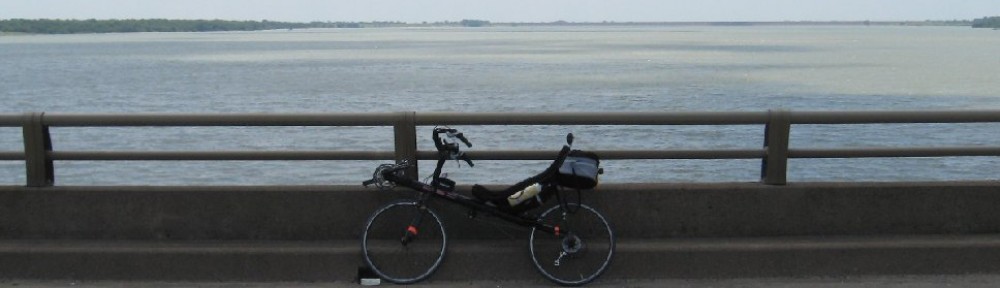
The drought has made March fishing quite a bit different for me than past years. And I’ve made fewer trips this year, with what seems like one health issue after another. The last half of this month has been terrible bronchitis, brought on some kind of bug. It was just about the time I was going to get back to a full exercise schedule. Instead, I’m still on my fat-adding, muscle-losing no exercise routine instead. Hopefully, I’ll be back exercising soon.
Cedar Creek has remained four feet low. Even in drought years, we usually get some decent spring rains, and the lake doesn’t get this low until summer, but here we are, end of March, four feet low. My best jig and bobber crappie spawning spots require a full lake, so those are off the table. I’ve explored several new spots that I thought might work on low water, and found a few with crappie. It hasn’t been a spectacular year for shallow spawning crappie, but I’ve caught between 10 and 18 very shallow crappie every time I’ve gone, a bunch of them really nice crappie, so I can’t complain too much.
The other pattern that’s usually so good for me this time of year is the shallow bridge piling pattern. There are a lot of bridge pilings with between 6 to 12 feet of water that seem to hold a lot of crappie this time of year, likely pre-spawn and post spawn crappie, but I suspect many do spawn in these areas too. Too many people seem to try and sit right on top of the crappie and lower jigs to them, but crappie at that depth tend to be too spooky from someone that close. I’ve found that casting and slowly swimming a double jig rig usually works much better. That’s become my standard go-to for these crappie.
But with the lake four feet low, that hasn’t worked well this year. With all the jagged concrete at the bottom of pilings, and all the rocks everywhere around it, with the water that low, you can’t retrieve the jigs slow enough to keep from getting snagged almost every cast. If you speed up the retrieve enough to stay off all the snags, it’s too fast a retrieve for the crappie; they just don’t bite. So I decided to try something I don’t otherwise do: I rigged a jig and bobber at 3 1/2 to 4 feet deep. That lets you stay back far enough to keep from spooking the crappie, but retrieve very slowly without getting snagged. It’s worked pretty well. I caught quite a few crappie on shallow bridge pilings this year.
But a bobber clamped 4 feet above a jig is just too awkward to cast well. A better setup is a bobber rig I hadn’t used in quite a few years: a slip bobber setup. A slip bobber rig lets the bobber stay close to the jig while casting, then allows the jig to drop to its preset depth after the cast. I ended up experimenting with different bobbers and bobber stop setups to find what I liked best. And I ended up surprisingly deciding that I’m going to start using this type of crappie setup more often. As soon as I saw how it performed, I started thinking of situations where I would want to fish a jig from 8 to 12 feet below a bobber, and became enthused enough about the prospect that I built myself a jig and bobber rod just for that. So far, I’ve only used it for the 4 feet deep setup and the 12 to 14 inch shallow bed setup I always used the jig and bobber for. But there will be summer and fall situations where I want to use a deeper jig and bobber, and I’m looking forward to trying it out.
All that said, my March fishing isn’t usually dominated by crappie fishing at all; it’s usually almost all sight fishing for bedding bass at Lake Fork. But the drought has severely impacted that too. Lake Fork is three feet low. That ends up having more implications for the bedding bass there than I would have suspected. First of all, like Cedar Creek water clarity, Lake Fork water is becoming muddier every year. It usually has so much vegetation in the shallow water, that that helps clear the shallow water some, even as the rest of the lake is muddier. Not this year. With the lake three feet low, all of usual vegetation is on the bank, or at least too shallow for bedding bass. So it’s just a sand bottom everywhere. There are spawning bass to be found on some of it, but the big bass are nowhere to be seen. I suspect they are spawning just deep enough to not be visible in this year’s muddier water.
Another problem with spotting bedding fish at Fork is the fact that the majority of bass anglers who fish for them don’t have enough sense to set their trolling motors more shallow than usual to keep from muddying the spawning areas. This is always a problem at Fork in the spring. But with the usual amount of vegetation, even after an idiot has severely muddied a spawning area with his trolling motor, it will clear fairly quickly. With no vegetation in the area this year, it isn’t happening. The area just stays muddy for hours. Much to the aggravation of those of us trying to sight fish who have enough sense to not muddy the water.
In three trips to Fork, I’ve caught 10, 10, and 13 bass with my sight fishing. But out of all of them, only one was over 4 pounds, a 4.20 pounder I caught Monday. There were a few 3 pounders yesterday, but not one was close enough to 4 pounds for me to bother weighing. I still love sight fishing, and will make the longer drive to Fork and play with the smaller bedding bass when I can’t find anything else. But I don’t think I’ll be making as many trips to Lake Fork under these conditions. I’m likely to shift my late spring fishing back to Cedar Creek sooner this year. I guess it could be worse. I could be stressing over work issues rather than fishing issues. I do enjoy being retired.
Monday’s 4.20 pound bass.
